
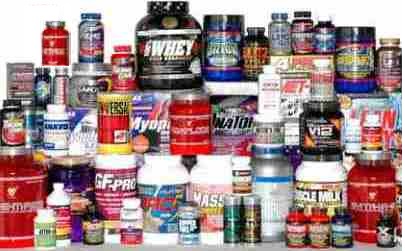
Protein Supplement for muscle growth & development. Beginner’s guide on the various types of protein supplements.
If you are actively engaged in serious athletic or weight training programs, you need enough protein.
Most adults need around 0.8g of protein per kilo of body weight per day, which is around 50g of dietary protein per day.
Protein can be classified as complete and incomplete.
- Complete protein: Available from animal sources such as meat, chicken, fish, dairy products, and eggs. It contains all the essential amino acids the body needs. However, these contain large amounts of saturated fat and cholesterol.
- Incomplete protein: Available from fruits and vegetables. These foods are low in one or more of the essential amino acids. Nuts, seeds, legumes, and grains all vary in their protein content and vegetarians will needs to combine these foods in the right way to get complete protein. Soybeans are one of the few vegetable sources that can supply complete protein.
So protein is mainly obtained by consuming animal products such as chicken, meat, and milk.
However, the typical Indian diet is vegetarian and has more of carbohydrates.
Dietary protein supplements (protein powders) are an effective way to meet your daily protein needs.
Almost your entire body is made of protein – Eyes, hair, skin, vital organs, even hormones. It means your body needs sufficient intake of proteins for the proper functioning of these organs, and even to help them look better.
That is why those who take protein supplements usually have good hair and skin, besides good overall health.
Protein Supplements are known to help build muscles quickly, without any harmful side-effects.
- Helps your body in muscle growth and repair
- Suitable for Vegetarians who do not consume meat
Protein supplements are recommended for vegetarians and those who do not consume a lot of food.
Whole milk is rich in all kinds of milk proteins (whey, casein), if you can handle all that saturated fatty acids, then whole milk is good enough. If you eat eggs, fish, chicken, meat, milk, cheese, vegetables, fruits, brown rice & bread, you may not need this (for just general fitness).
Protein supplements are available in the form of protein powders and protein bars.
Here are the different types/forms of protein supplements.
Whey Protein Supplements
Whey protein is the most common protein powder available on the market and is considered the ultimate source of protein. It is quite popular among fitness enthusiasts, and even with vegetarians who otherwise may find it difficult to get enough protein in their diet.
Whey can do wonders for your muscles and also for your overall appearance.
Whey is very important for bodybuilders who are looking to put on some serious muscle mass, but whey is useful to just about everyone.
Studies have shown that when compared to other sources of protein, whey protein has the perfect combination of amino acids. Consistent intake along with exercise will greatly benefit muscle growth and maintenance.
Whey protein comes with glutamine, a muscle enhancer and reducer of muscle deterioration. Whey will help your muscles recover faster from any type of workout.
The recommended amount is around 25-50g of whey protein a day. This is usually 1-2 servings a day.
- Add 1 Scoop of powder in 200 ml milk or water.
- Take this shake two times a day, increase it to 3-4 times a day as required.
Though whey protein powders can be consumed by just about everyone, they are recommended more for bodybuilders who are looking to put on some serious muscle mass (they need to consume as much as 150g per day).The side effect of any protein supplement is that you could overload your liver and/or kidneys by consuming large amounts of protein. Stay within the recommended usage and there should not be any problem at all in terms of side-effects.
Whey protein powder supplements come in three main forms.
Whey Protein Concentrate (WPC)
Concentrates are low fat, low cholesterol, but test to be higher on the carbohydrate side of things. These are usually the cheapest form of whey protein powder you can get. B.V. – 104
Whey Protein Isolate (WPI)
Isolates removes the fat and lactose. Because of their higher concentration, your body is able to absorb around 70-80% of the protein. B.V. – 157. Tend to be expensive.
Blend
As the name suggests, its a blend of the above two, and has B.V of 104 – 157. These are priced between the two.

Do Not Cook with Protein Powders
Protein powders, especially whey protein are sensitive to high temperature. Just dissolve it in water and have it. You can use milk or fruit juice to add to the taste.
Casein Protein Powder: Slow Digesting Protein
Casein protein is a slow digesting protein (takes up to 7 hours to fully digest it) that helps to reduce muscle degradation, and is usually used in conjunction with whey protein.
Casein protein, like whey protein powder, comes from milk.
Casein releases amino acids slowly and steadily into your blood stream; the amino acids in your blood stream peaks in about 3-4 hours after consuming it. Compare this to 40 minutes with whey protein, and one hour to fully digest.
Casein does little to impact actual protein synthesis, or muscle building, but because of its slow release it actually helps in suppressing protein breakdown.
Muscle growth occurs best under increased protein synthesis and decreased protein breakdown. Because of this, it is best to use casein protein in conjunction with whey protein.
Casein is the only protein you should eat before you go to bed. It provides protein throughout the night when you are sleeping 6-8 hours without eating food.
This prevents muscle from being broke down during your sleep.
Amino Acid Basics
In simple terms, Amino acids are proteins, and play an important role in building muscles, repairing tissues, and are responsible for the production of enzymes.
Amino acids are the building blocks of proteins, and protein plays a crucial role in almost all biological processes (essential for all metabolic processes).
Once proteins are broken down into amino acids, the amino acids combine with nitrogen and other chemicals, to produce various protein forms that the body can use.
Proteins are broken down into essential amino acids and non-essential amino acids.
Essential amino acids cannot be produced by the body; these amino acids have to be supplied in our food.
All amino acids (essential as well as non-essential) are important for proper protein synthesis.
In order to achieve optimum protein synthesis, all of the required amino acids must be present in the body at the same time and in the right quantity.
Any essential amino acid in short supply (also known as the limiting amino acid) restricts the quantity of protein that can be synthesized, regardless of the quantity of other amino acids in the body.
Vitamin B6 and Vitamin C are needed for amino acid metabolism and to help absorption of amino acids. So you will need to take these vitamins supplements along with your amino acid supplements.
Make sure your amino acid supplement contains all the essential amino acids in the right proportions.
Remember, amino acids work best when all of the essential and non-essential ones are provided to the body. Therefore, it’s a good idea to add a complete amino acid supplement to your diet.
While most amino acids are practically harmless and offer many benefits, some amino acids (such as tyrosine) may cause restlessness, anxiety, and rapid heartbeat at higher doses (in rare cases).
Three of the most important amino acids in the body are leucine, isoleucine and valine, collectively known as branched-chained amino acids (BCAAs).
Their function is to maintain muscle tissues, preserve muscle glycogen stores and prevent muscle breakdown during strenuous exercise. Many take BCAA supplements to enhance physical training effects and improve performance during exercise.
While there have not been any reported side effects of BCAA supplements, excess BCAAs are usually converted to other amino acid forms, used up as energy, or stored up as fat. If you have liver or kidney disease, you should first consult your doctor before taking high doses of amino acids.
Creatine Supplements
Creatine is one of the most widely used performance supplements in sports and fitness training. These supplements are athletic aids used to increase high-intensity athletic performance.
Creatine is naturally produced by our bodies in the liver, pancreas, and kidneys. It is delivered to our muscles where it is converted to phosphocreatine. This supplies energy to our muscles through the production of adenosine triphosphate (ATP).
Since creatine is all natural, it is not banned by sports. It can be found in many food products such as beef and tuna, but creatine supplements offer more creatine per weight.
Egg White Protein
Egg white protein used to be the main source of protein for bodybuilders and athletes, long before protein products were available.

Eggs have an amazing amino-acid profile, great for building muscle tissue. They provide high amounts of quality protein without any of the fat.
However, because of the cholesterol in eggs, it was still considered a bit unhealthy.
Egg protein products do not have cholesterol and are starting to become more popular for this reason.
Egg protein is absorbed between the fast absorbing whey protein and slow absorbing casein protein. You can consume it at pretty much any meal.
Soy Protein Supplements
Made from soybeans, Soy Protein is low fat; sometimes fat free, as well as cholesterol and lactose free. This makes soy a great source for those who are lactose intolerant. It is also a great meat substitute for vegetarians and vegans.
Compared to other proteins, soy falls a bit short in terms of Biological Value, and has less methionine, a protein that helps in protein synthesis.
So, if you’re a non-vegetarian and are lactose tolerant, I would recommend that you choose another protein powder.
Protein Bars Supplements
Another alternative to protein powder is Protein bars!
Protein bars are convenient to carry and you can have it right after your workout. Most protein bars are also loaded with multi vitamins and minerals.
While some brands even claim their protein bars to be a meal replacement, I personally do not recommend skipping your meals or replacing your daily intake of fruits and vegetables for a protein bar.
Here is what you should look for when picking up your protein bar.
- Should be high in protein & Low in sugar
- Should be low in carbs and fat content
- Should have more fiber
In general, pick up a protein bar whose ingredients is easy to read and understand.
If you cannot understand what the ingredients mean, don’t hesitate to put the bar back in the shelf.
Summary
If you are into serious athletic or weight training program, you may need to consider using Protein supplements to aid your muscle growth. Your body basically needs protein for muscle growth and repair. Having insufficient protein could lead to torn muscles and longer recovery periods. Protein supplements are a quick and easy way to greatly increase your protein intake, especially if you are a vegetarian (non meat eaters).










Leave a Reply