Being able to cycle is an important skill to have, and also an important milestone for a child. Here’s how to use teach cycling to kids.
Using a Balanced Bike
A balanced bike for kids is a type of bicycle that is designed for young children to learn balance and coordination, without the use of training wheels.
It has a low profile frame and smaller wheels.
A balanced bike enables a child to explore cycling at the earliest. It is a kind of ride-on bike that enables toddlers to learn to balance at an early age. Balance bikes are available for kids aged 18 months to 4 years old.
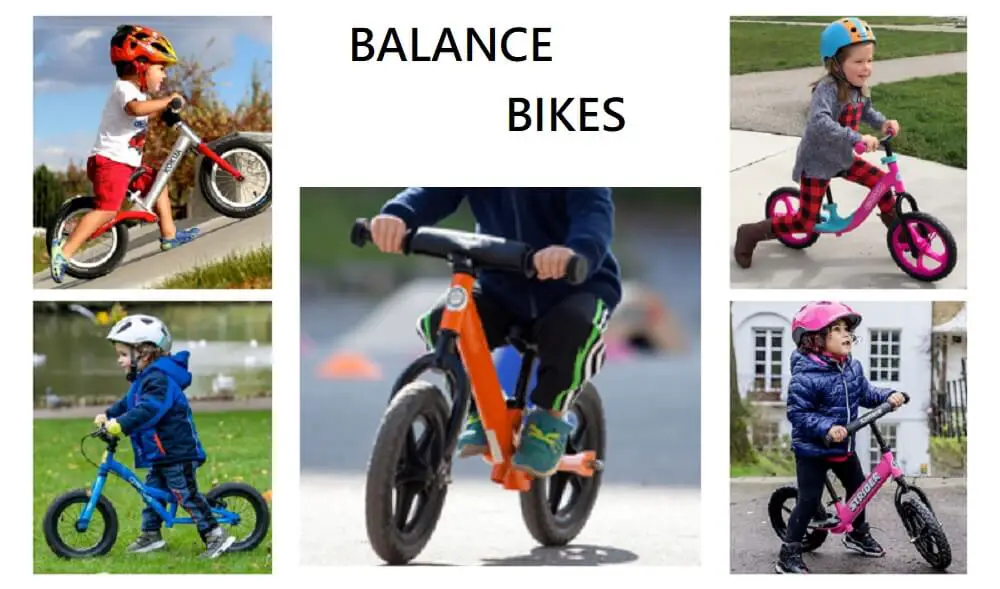
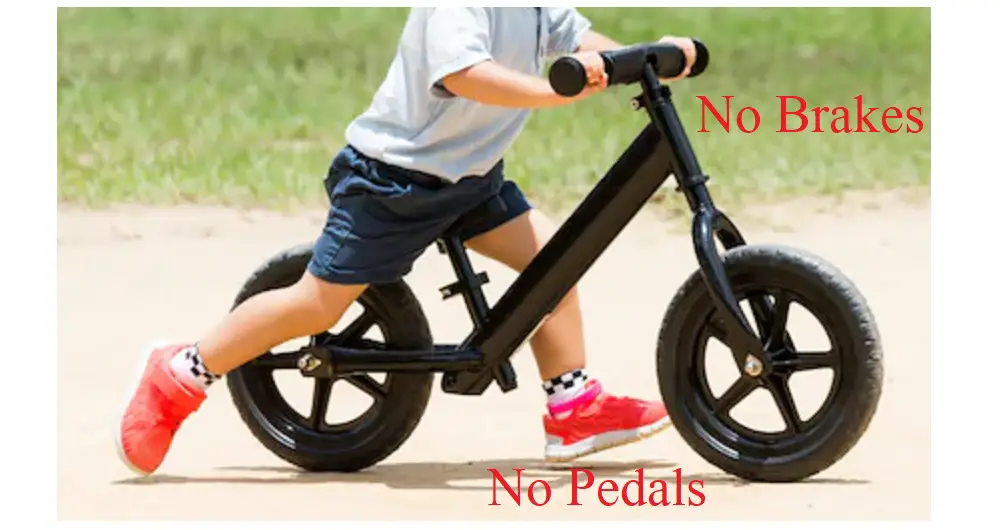
Unlike a pedal bike, balanced bikes generally do not come with pedals.
Children have to propel themselves forward by pushing off the ground with their feet, and as the bike picks up pace, the child is suppose to learn to balance while the bike is in motion.
Once the child is able to balance on two wheels, it makes the transition to a regular bicycle easier.
These bikes also generally do not come with brakes and need to be stopped using the feet.
What age to start?
A child aged 18 months to 2 years old can start on a balance bike.
Why use a Balance bike?
Cycling is good for health as it improves cardiorespiratory fitness, but it also provides children with the opportunity to interact with other kids and allows them to better explore the environment which enables them to become more active and independent.
This has a positive effect on a child’s development (motor development) and they also get to learn a new skill.
Ride-on-toys are quite popular among kids. However, I have always felt that parents should ideally buy a ride-on toy that can challenge the kids mentally and/or physically, besides being just fun.
That’s what a balanced bike does!
These are fun to use, challenges them initially, but makes it easier for kids to ride a regular bike later on.
Besides, most balance bikes come with foam or rubberized wheels, which means these can be used indoors as well.
The most important advantage of a balance bike is that it encourages the child to balance, so it will make it easier for them to learn to ride a regular bike when the child grows up (and you won’t have to do all that running behind the bike).
Using Training Wheels
You get bicycle for kids that come with a set of training wheels. While as parents you may think that bikes for kids ought to have training wheels, its often not the best way to teach a child to ride a bicycle (read more on balanced bikes here).
Advantages of Training Wheels
The biggest advantage of training wheels is that it gives a child the confidence to try to learn to ride a bike.
Some kids are afraid of mounting a bike (often happens in the case of older kids); if they have tried riding a bike (without training wheels) before and taken a fall then it could make them more reluctant.So training wheels give confidence to kids so that they can start learning to ride.
It’s also reassuring for parents, if they are trying to teach their kids to ride.
Problems with Training Wheels
These also have a few downsides:
The child is going to take longer to learn to ride a bicycle.
Often, kids have a frustrating time transitioning from training wheels to “without-training wheels”.
Training wheels don’t actually teach a child how to ride a bike, because the kids don’t learn how to balance (there is a right way to use the training wheel though).
While turning, weight of the bike shifts from the rear wheel to the outside training wheel, reducing the braking power of the rear wheel.
Riding a bike with training wheels can also be wobbly and awkward for the child, if the wheels are not properly aligned (and if the child has not learnt how to balance).
A bigger sized bicycle with training wheels can be riskier for the child as opposed to a smaller sized tricycle. A bike going faster can topple over while taking sharp turns.
(Make sure, you lower the height of the seat as it will allow the child to sit deeper into the wheels and will feel safer, if they can touch the ground with their feet).
How to Increase the Effectiveness of Training Wheels
Over the past few years, the balance bike has been growing in popularity and many feel that a balance bike is better (compared to the training wheels) in order to learn to bike.
While that may be correct to some extent, training wheels are useful in certain scenarios.
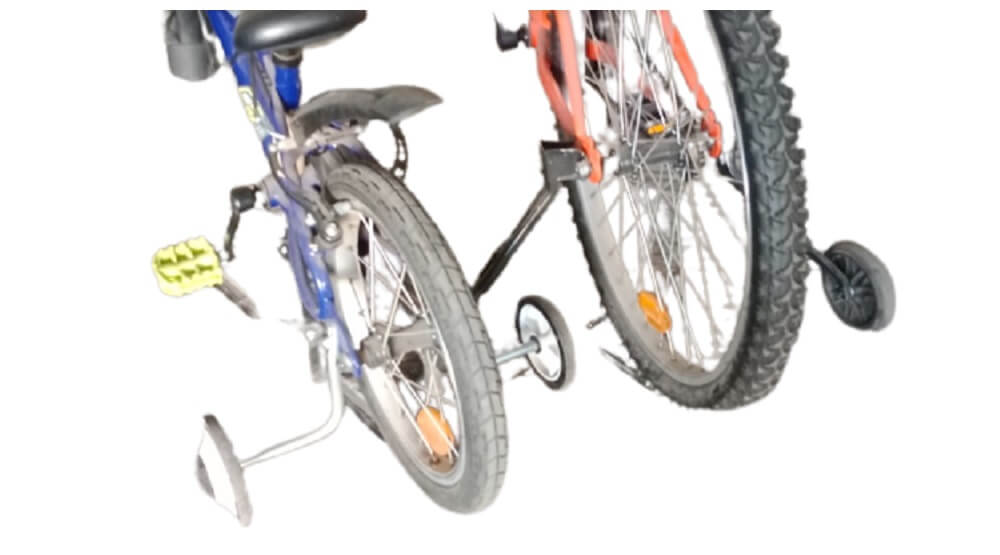
What if someone (friend or family) has gifted your child a bicycle?
In that case, why not make the most of it, by attaching training wheels to it?
What if a grownup child wants to learn to cycle?
In that case, the choices of balance bikes may be limited.
Also, the grownup child will have much developed motor skills and will be able to deal with balancing, using pedals and brakes, much faster. They might need support for some time, and that can be best provided through the use of training wheels.
Also, I have seen that some kids just don’t feel comfortable on a balance bike, and they are going to be even more reluctant to use it if they fall down when using it (may happen when they are trying it for the first time, although it won’t hurt due to the low height).
So, training wheels do serve a purpose in specific situations.
And you also need to use the training wheels in a certain manner, in order to increase its effectiveness (to help the rider learn to balance).
The trick is to gradually keep raising the training wheels over a period of time.
Here’s the Right Way to Use Training Wheels.
Even with the training wheels attached, a bike should always have a little bit of lean; there should be a small amount of tilt from one side to the other.
The training wheels should ideally not touch the ground.. These are meant ‘to stabilize’ and not really meant to convert the bike into a quad. So the training wheels should ideally not touch the ground at the same time.
Once the child is accustomed to pedaling, steering and braking, you should raise the training wheels (a bit at a time). And its best not to tell your little one about this, and not do this task in front of him/her as they can object or throw tantrums.
When the training wheels are raised, the bike will tilt more (become more tippy) which will encourage the child to learn to balance. Gradually, the child will learn how to balance and the training wheels will be off the ground most of the time.
Once the child has become adept at balancing the training wheels can be removed. When the training wheels are off, ensure your little one can touch the ground with the feet as it is much more reassuring.
You may increase the seat later on, once your child is able to ride the bicycle with confidence.
So, let your child ride the bicycle (with the training wheels attached) for a few days or even for few weeks.
You can then raise the wheels a bit so that the wheels do not touch the ground.
Let your child ride that way for some time. You need to check initially if the tilt is something that your child can handle. And they should be, since you won’t raise the height much, and they would have gotten comfortable on the bicycle by now.
Again, after a few weeks, you can raise the wheels a bit.
Gradually, you will reach a stage where your child won’t need the wheels and you can get rid of them.
So, training wheels can be useful, when used in a certain manner.
Even though I had bought a balance bike for my son initially, I later bought him a bigger sized bicycle and used training wheels for some time.
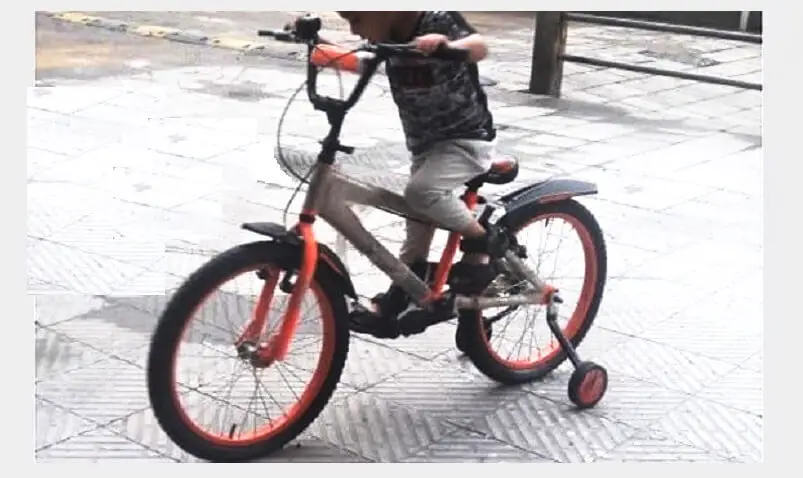
My son knew how to balance and steer, but I wanted to be sure (because the height of the new cycle was more). I gradually kept raising the wheels and eventually got rid of the training wheels.
Buying Training Wheels: Factors to Consider
If you have decided to go ahead with training wheels for cycling, you should take into account the following factors.
Compatibility: Make sure the training wheels you are buying are compatible with your child’s bike. Check the wheel size and frame to ensure a proper fit.
Stability: The training wheels should be stable and provide balance to help your child learn how to ride a bike.
Durability: Choose training wheels that are made from durable materials to withstand the wear and tear of frequent use. You do not want the wheels to quickly wear off completely as it can cause the cycle to tilt and fall.
Adjustable Height: Look for training wheels that can be adjusted in height as your child grows, allowing for a gradual transition to riding without training wheels.
Ease of installation: Ensure the training wheels are easy to install and remove, allowing for adjustments as needed.
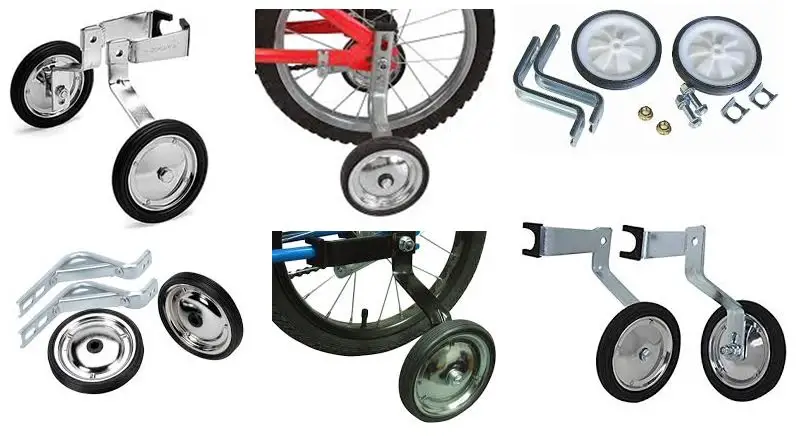
You will need to attach training wheels to the cycle, so some assembling is required although the installation is quite simple and requires few tools. Most purchases come with the necessary tools (wrenches) to set these up. If you have a better set of tools at home, feel free to use them to secure the wheels to the bicycle.
Balance Bike vs Training Wheels: Pros and Cons
German Karl Drais invented the balance bike (way back in 1817) when he created a balance bike by attaching two wheels to a wooden frame. His invention was called by several names such as running machine, velocipede, dandy horse, hobby horse, and so on.
Even though many parents continue to teach their kids to cycle using training wheels attached to a bicycle, the popularity of the balance bike suggests that many see it as an efficient way of learning to cycle.
Let’s see the pros and cons of each option:
Pros of a balance bike
A balance bike teaches children how to balance and steer without requiring pedals or training wheels, or a parent’s hand to hold them up. This can help children develop coordination, confidence and independence.
Balance bikes tend to be lighter and easier to maneuver, compared to regular bikes with training wheels, which makes it easier for a child to control the bike.
Balance bikes have a low profile and can be used from a much younger age (compared to regular bikes with training wheels). As soon as a child can walk, they can use a balance making them a great tool for early childhood development.
Cons of a balance bike
Balance bikes do not teach children how to pedal (they also usually do not come with brakes) so they will still need to learn these skills when transitioning to a regular bike.
This can be a bit of a learning curve for some children (although not a big one), especially if they are used to the balance bike’s glide.
Also, when the child is using the balance bike for the first time, you should provide them support. The child could fall while maneuvering, if the handle is not held properly. However, once they get the hang of it (usually takes a few minutes), you need not worry.
Although these bikes have a low profile and the child is unlikely to get hurt badly, it’s just that the first fall can put off some kids who then may not want to ride it for some time.
So, just make them comfortable initially.
Pros of training wheels
Training wheels are an add-on to a regular bike that provides better stability and support while a child learns to pedal and balance.
So, kids can ride on a regular bicycle and learn to use pedal and brakes.
Parents need not worry and do not have to run after the cycle to provide support.
Cons of training wheels
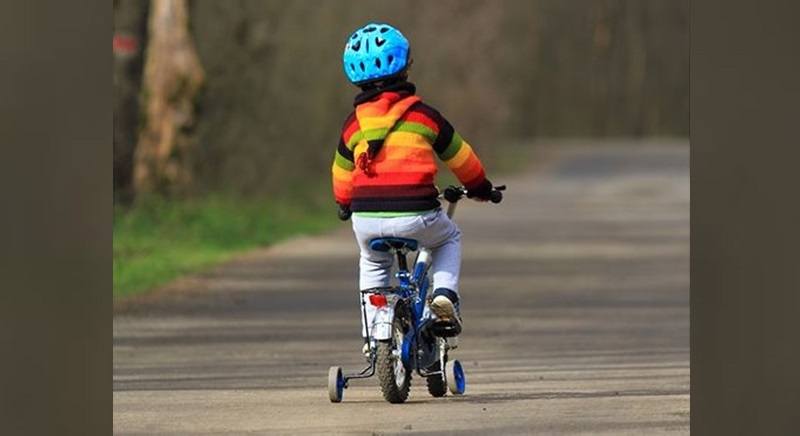
Training wheels can create a false sense of security for children, and a false belief that they can ride a cycle.
The fact is that it will not help the child to learn to balance and they will not develop the confidence required to ride a regular pedal bike (without training wheels) later on.
Training wheels also prevent children from learning the right way to steer, as the wheels may not allow them the same degree of control as a regular bike. This can limit a child’s ability to maneuver around obstacles or turn sharply.
So, both the methods have their own advantages and disadvantages.
I made use of both balance bike as well as training wheels for my little one, although I made him start on the balance bike first.
- I initially bought him a balance bike.
- Once he learned how to balance, I bought him a slightly bigger sized bicycle and used training wheels (although I made sure the training wheels were raised slightly and didn’t touch the ground).
- Once he was comfortable on the bigger bike, I got rid of the training wheels.
Learning to ride the bike
A balanced bike makes it easier for a child to learn balance and coordination at the same time, although it takes time for them to learn to do this.
Here are some tips that will help children to learn to ride a balanced bike quickly, and also enjoy the experience along the way.
Make sure the seat height is low and enables the child to reach the ground while seated on the bike. With a balanced bike, you really do not need to provide support to them (to prevent them from falling). Teach them to use their legs instead.
You must gradually increase their riding time and distance. Let them start with short rides and gradually increasing the duration of their rides.
Encourage your child to ride in a straight line and to raise both the legs from time to time.
Let them start slow. Let them walk with the bike to begin with, and gradually progress to gliding and balancing on their own. The more they spend time with the balanced bike, the quicker they will learn and develop their balance and coordination.
Teach them safe riding habits such as wearing a helmet and avoiding distractions (or looking behind while riding).
Precautions to be Taken
While riding a balanced bike, the following safety precautions should be taken.
- Make your child wear a helmet. It is important to protect the head from injury in case of a fall.
- Avoid riding on rough terrain or obstacles that could cause the child to lose balance and fall. Do not let them ride on slopes as they may not be able to control the speed.
- Young children should be closely supervised while riding a balanced bike to ensure they do not fall or get into an accident.
Just ensure your child is wearing a helmet while riding this bike, and you be around the bike, at least until your child gets a hang of it.
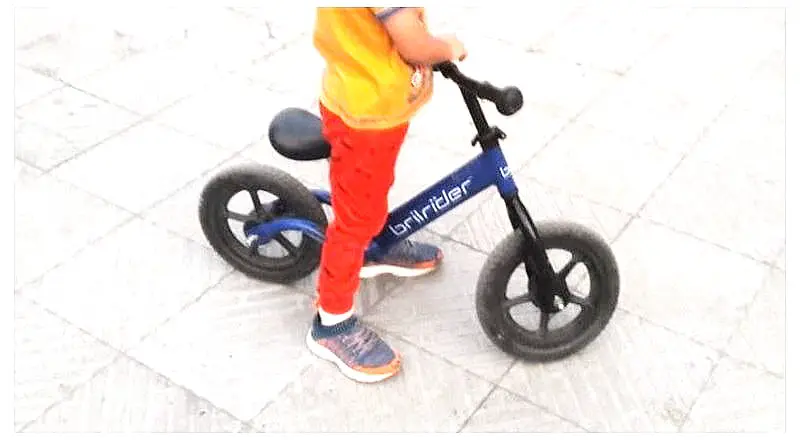
Buying a Balanced Bike
A Balanced bike operates using a simple mechanism but choosing a suitable balanced bike for your child may not be as simple a task.
The riding experience on a balance bike is dependent on factors such as bike size, build quality, and features.
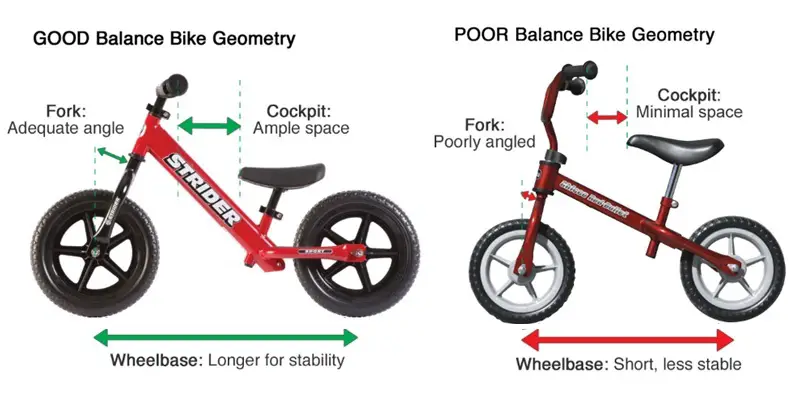
When choosing the best balance bike for your little one, make sure you pay attention to the following factors: Size and weight of the bike, Tire type and size, Frame materials, Hand grips.
Balance Bike Tires: Most balance bikes will have solid tires that are made of foam or plastic (with rubber like covering). So, these bikes can also be used indoors, and you need not worry about any markings on the floor.
You will also require fewer repair and maintenance activities on these bikes because it uses fewer components (no pedals, no brakes, no bells).
The slightly bigger sized balance bikes may have pneumatic tires (air filled) which are similar to the ones you see on adult bicycles. These are better suited for uneven terrains, but they can also go flat and require maintenance.
For most 2 and 3 year-olds, solid tires are perfectly fine.
Once they learn to balance, you may consider buying a bicycle with pneumatic tires for them.
Wheel Size: Most balance bikes have 12″ wheels, which suits most toddlers. You also get 14″ wheels for slightly bigger kids (preschoolers). If you need something bigger, you may consider getting a bicycle with 16″ wheels.
In general, the size of the wheel determines the height of the bike.
Brakes: Most balance bikes do not come with brakes, the child is supposed to stop it using the legs. This is perfectly fine, as most models also do not come with pedals, and they won’t go very fast.
Balance Bikes with Brakes
Balance brakes can be used by kids who are as young as 2 years. At that age, it can be too much for the child to learn to balance, steer and also apply brakes.
That is the reason, why most balance bikes do not come with brakes.
Even if you give them a bike with brakes, they are going to struggle to remember all the instructions (especially related to brakes) because they are going to struggle to balance initially.
It is best for the child to learn to balance and steer the bike.
However, sooner or later, the child is going to become an expert at balancing and at steering the bike.
When the child reaches that stage, what I have observed is that they love to bring the bike to a halt using their heels, because they are now moving much faster and they don’t know how to use brakes yet.
And that is when holes started appearing at the front/bottom of the my little one’s sneakers.
So, once your little one has mastered balancing, you should get them a bicycle with brakes.
You also get balance bikes that come with brakes. However, I am not really convinced if you should get balanced bikes with brakes.
Instead, it makes sense to invest in a studier and bigger sized bicycle with brakes.
Useful Accessories for Bicycles
Replacement Wheels


Pedal Kit


Handle/Harness for Balance Bike